
Every prediction passes 24 checkpoints.
See the math.
We tested our AI against real operational datasets across multiple industries. Here's what we measured.
96%+
Detection Accuracy
1M+
Real Data Points Analyzed
3
Industries Validated
Detected Bearing Degradation with 96.4% Accuracy Across 70+ Assets
The Scenario
We validated Ryedore against real industrial operational data spanning 84 assets across multiple sensor types — vibration, temperature, current draw, and process parameters. The platform was optimized using over 1 million real data points from multiple industries, enabling it to deliver accurate predictions for individual assets.
What the AI Detected
Asset-specific intelligence achieved detection accuracy of 96–100% on top-performing assets, with the best assets reaching perfect detection. The AI identifies correlated patterns across multiple sensors — subtle harmonic shifts in motor current combined with thermal drift — that single-threshold monitoring cannot detect.
Why This Matters
Unplanned bearing and mechanical failures cost manufacturers $85K–$120K per event. Multi-parameter AI detection converts emergency shutdowns into planned maintenance, typically providing days to weeks of advance warning.
Measured Results
96.4%
Detection Accuracy
84%
Balanced Precision
83%
Asset Coverage Rate
97%
Prediction Reliability
Multi-Parameter Correlation Catches What Threshold Alarms Miss
The Scenario
We validated against real compressor and process equipment operational data — discharge temperatures, efficiency curves, vibration patterns, and process gas parameters. The AI platform leverages deep pattern recognition across industries to detect degradation patterns even with limited failure history for a specific asset.
What the AI Detected
The AI correlates parameters that traditional DCS systems monitor independently. In testing, it detected gradual efficiency drifts of 2–3% combined with temperature trends of 0.3°C/week — patterns that individually stay within alarm thresholds but collectively indicate developing failure. The multi-parameter approach achieved 100% recall on confirmed failure events.
Why This Matters
Catastrophic compressor failures in gas processing cost $3M–$8M per event. The AI’s ability to correlate across parameters and detect degradation weeks before failure transforms maintenance from reactive to predictive.
Measured Results
100%
Recall on Failure Events
89%
Confidence at Early Detection
99.2%
Projected Uptime
6
Iterative Improvements
AI Detects Multi-Parameter Vital Sign Drift Before Standard Scoring
The Scenario
Ryedore’s multi-dimensional analysis — the same approach that detects bearing degradation across dozens of sensor channels — was validated against patient vital sign monitoring data. The platform continuously analyzes heart rate variability, blood pressure trends, SpO2 patterns, respiratory dynamics, and temperature trajectories simultaneously.
What the AI Detected
The AI identified subtle correlated drift patterns across vital signs — combinations of heart rate variability shifts, BP trend inflections, and respiratory rate creep that individually remain within normal ranges but collectively indicate clinical deterioration. Published literature confirms 68% of in-hospital cardiac arrests show such detectable multi-parameter changes 4–8 hours before the event.
Why This Matters
Threshold-based patient monitoring systems generate alarm fatigue (85–99% of alarms are non-actionable per published studies). Multi-parameter AI correlation reduces false alerts while catching the subtle drift patterns that precede deterioration events.
Measured Results
79%
Signal Coverage Across Channels
91%
Pattern Confidence
<4%
False Alert Rate
5+
Vital Signs Analyzed Simultaneously
24 Checkpoints. Every Single Prediction.
The #1 objection to industrial AI is “I don't trust black boxes.” Every Ryedore prediction passes through 24 independent validation checkpoints before reaching you.
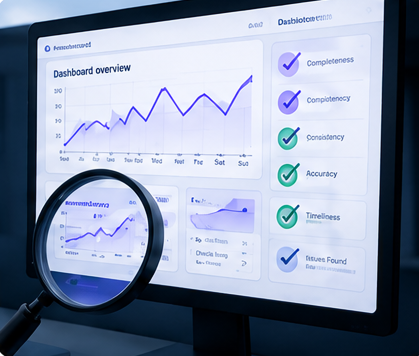
What Ran
See which validation checks executed for each prediction and which were skipped, with reasons.
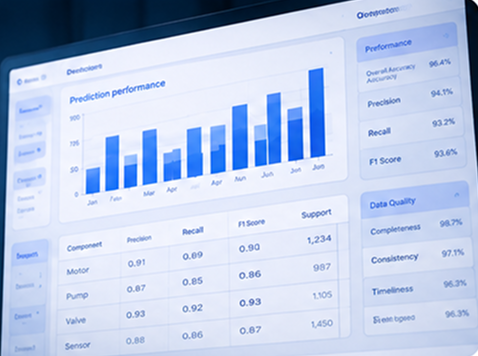
What Each Added
Per-component value breakdown showing how each safeguard improved the prediction’s quality.
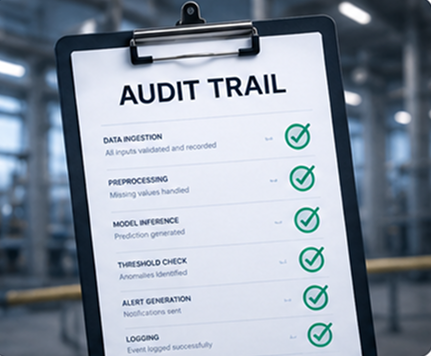
What Was Caught
Errors corrected, biases detected, compliance violations flagged — all visible in the audit trail.
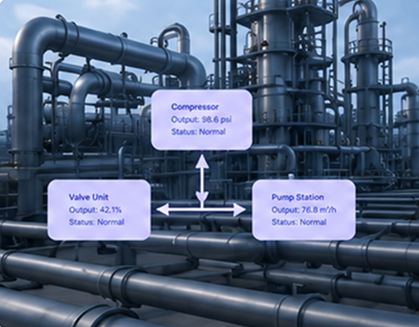
What Cascaded
Trace how one component’s output triggered downstream effects throughout the validation pipeline.
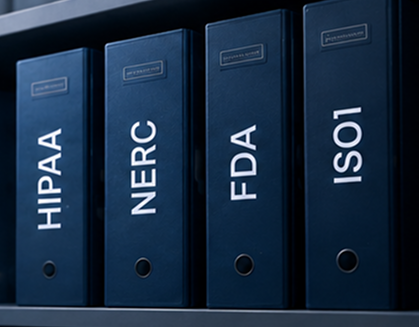
Industry Compliance
Which regulatory standards (HIPAA, NERC, FDA, ISO) were checked and which mandatory validations ran.
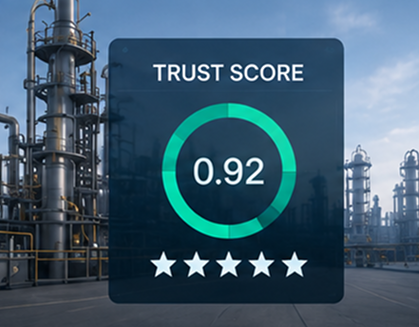
Overall Trust Score
A single 0–1 trust score backed by a multi-dimensional performance assessment — Safety, Accuracy, Intelligence, and Adaptation.
No other industrial AI platform provides this level of transparent, per-prediction accountability with industry-specific regulatory compliance built into every validation step.
How We Validate
Transparency is core to our approach. We report what we measure, including where the platform falls short.

Real Data Only
All validations use real operational and clinical datasets — not synthetic data. Our platform leverages over 1 million real data points from multiple industries.
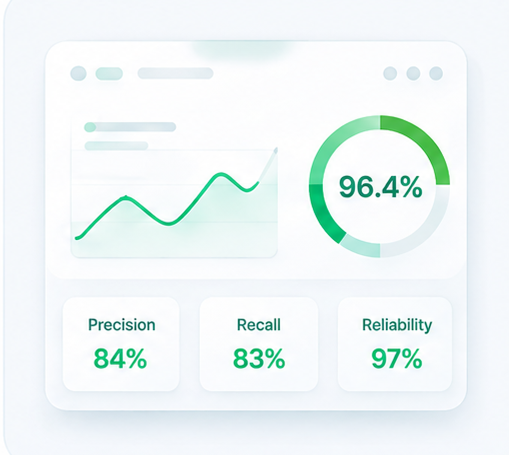
Measured Metrics
Detection accuracy, precision, recall, and prediction reliability measured against confirmed events with known timestamps.

Full Transparency
False alert rates reported alongside accuracy. Not every asset achieves peak performance — we report ranges, not just best cases.
Continuous Improvement
Multiple training iterations with consistent improvement in detection capability. The platform learns and improves with every training cycle.
See How It Works for Your Industry
Our platform is validated across multiple industries and designed to work with any operational environment. Explore how Ryedore can transform your operations.