
Skip to content
Abstract network of signals — the reasoning engine at work

How it works

The reasoning engine, the memory, and the trust layer. One platform.

It watches your sensors, remembers every failure it has seen, and works out why something is going wrong.

Every new version has to prove it’s better before it’s allowed to run. Each part below is shown with an example.

01 · what “reasons” means

Start with the output: a complete reasoning trace

A chemical‑plant reactor, from raw sensor readings to a recommendation. Seven steps, including the causal chain, and a confidence you can question. This is exactly what the platform produces.

Reasoning trace · exactly what the AI produces
Chemical plant — Reactor R‑201 · catalytic reactor, 847 sensor channels
illustrative
  1. Observation 1/7

    Reactor R‑201 jacket temperature differential: +3.2 °C from setpoint. Catalyst bed pressure drop: −0.4 bar in 6 hours.

  2. Deduction 2/7

    Temperature differential exceeds the 2.5 °C operating threshold. Pressure‑drop pattern consistent with channeling.

  3. Temporal 3/7

    Rate of pressure decline is accelerating — 0.05 bar/hour initially, now 0.08 bar/hour.

  4. Analogy 4/7

    Pattern matches, at 91 % similarity, the Reactor R‑105 incident from March 2024 (catalyst poisoning).

  5. Causal 5/7

    Root‑cause chain: feed impurity → catalyst surface fouling → bed channeling → hot‑spot formation.

  6. Induction 6/7

    87 % of similar catalyst‑degradation events required intervention within 72 hours.

  7. Impact analysis 7/7

    If feed filtration had been inspected per schedule, this degradation would have been delayed by about 6 weeks.

Conclusion

Catalyst bed integrity declining. Recommended: inspect the feed filtration system within 24 hours; schedule catalyst screening at the next planned shutdown.

Confidence: 89.4 % · every step above is recorded and auditable

This is what “causal reasoning” means in practice: not a score, but the chain of causes — and a recommendation you can check.

swipe → to see the whole diagram

60 seconds · no sound needed

The same trace, animated

The seven steps above, from sensor deviation to recommended action, in one minute. Served from this site; nothing loads from anywhere else.

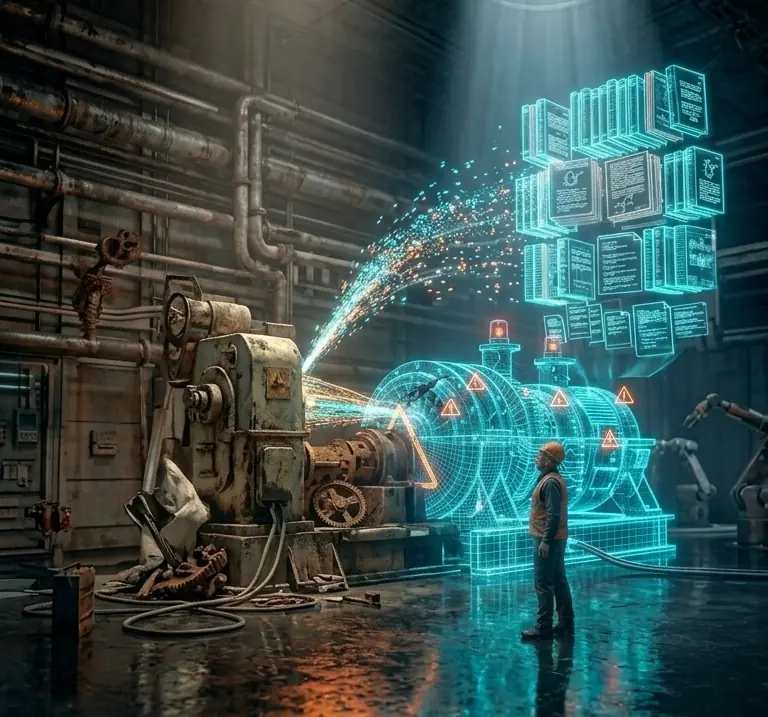
Engineer studying a holographic reasoning graph
02 · eight ways it reasons

Every situation is analysed from several angles

These are the reasoning approaches an experienced diagnostic engineer uses intuitively — observation, rules, patterns, root cause, chains, trends, cross‑reference, impact.

the reasoning toolkit

Eight distinct ways it reasons — because one way misses things

Not a magic number — the attested set the engine runs today, from simple observation to counterfactual impact. Each shown with one example, each from a different industry.

Show all eight, each with a worked example ↓
  1. Observation

    1/8 · Manufacturing

    CNC spindle vibration up 0.3 mm/s over baseline — recognise the signal.

  2. Rule‑based

    2/8 · Utilities

    Grid transformer past the 105 °C threshold — protection protocol required.

  3. Pattern‑based

    3/8 · Healthcare

    The last 47 sepsis cases showed this heart‑rate variability + temperature drift.

  4. Root cause

    4/8 · Chemicals

    Most likely explanation for the reactor pressure drop: catalyst bed channeling.

  5. Chain analysis

    5/8 · Automotive

    Humidity sensor drift → booth temperature variance → adhesion failure.

  6. Trend analysis

    6/8 · Mining

    Conveyor tension declining 0.2 % a day for 18 days — accelerating.

  7. Cross‑reference

    7/8 · Aerospace

    This blade pattern is 89 % similar to a 2024 incident — cross‑reference memory.

  8. Impact analysis

    8/8 · Food & beverage

    If the chiller had been serviced 10 days earlier, this batch loss would not have occurred.

03 · memory that doesn’t forget

It learns new failures without forgetting the ones it knows

Most tools retrain from scratch and lose what they knew. Ryedore keeps every failure, near‑miss and confirmed root cause — weighted by how much it matters.

For example: a pump‑cavitation pattern learned in a pharmaceutical plant sharpens predictions for water‑treatment pumps.

An industrial site at night, seen from above
Product screen: the reasoning chain for the last prediction with challenge-and-verify controls and the confirm/override feedback bar
The trace above, as the product shows it · Screenshot from the product — demonstration data.
Product screen: the eight reasoning types with how often each was used in recent decisions
The eight types, with how often each fired · Screenshot from the product — demonstration data.
03 · what the memory keeps

Forgets noise. Never forgets a failure.

Retention grows with how much an event mattered — from weeks for normal operation to never‑pruned for a confirmed root cause.

Normal operationmay be pruned after weeksMinor anomalykept for monthsSignificant driftkept for yearsEquipment failurekept permanentlyNear‑miss & confirmed root causenever prunedweeks → months → years → permanent · learned once, never lost to a retrain
The memory forgets noise and never forgets a failure — retention grows with how much an event matters.

swipe → to see the whole diagram

04 · the trust layer

A new version can’t serve if it’s worse on any task

Every candidate is evaluated on every prediction task against the version currently running. Worse on even one — blocked, and logged. That is the honest version of “self‑correcting”.

THE PROMOTION PATH1Candidatenew model version2Evaluate on every taskthrough the quality gates:no‑regressionserving budgetcalibrationdriftfairnessdata qualityworse onany task?no3PROMOTEDserves · reversibleyesBLOCKED — loggednever reaches servingEVIDENCE LOG · DEMONSTRATEDcategory accuracy 0.90 → 0.75BLOCKEDimproved on every taskADMITTEDevery decision is a rowyou can audit → /verify/
So the model you run today is never worse than the one you ran yesterday. Not a promise — a gate we run, and we show the log.
blocked 0.90 → 0.75
Demonstrated
signed · re-runnable
The evidence log is on Verify →

swipe → to see the whole diagram

05 · how it responds

Four response modes — matched to how fast the moment moves

One engine, four tempos: it reacts in a fraction of a second, deliberates over hours, learns on confirmation, and explores the unknown cautiously. Which mode fires is decided by the situation — never by chance.

sub‑second
Reactive
A critical anomaly at high confidence

Alerts instantly — no deliberation on a safety‑relevant spike.

for example · Blast‑furnace pressure spike → instant alert to the operator.

A person always decides the response; the alert carries its evidence.

minutes → hours
Deliberative
Routine monitoring and complex, slow‑moving problems

Builds context across thousands of streams before it speaks — trends, cross‑references, cause chains.

for example · 2,000 sensor streams across a plant; the transformer’s slow thermal drift surfaces with its cause, not as noise.

The full trace is attached — every deliberate answer can be questioned.

on confirmation
Learning
An operator confirms or corrects a diagnosis

Strengthens the confirmed causal pathway and re‑weights what mattered; the lesson is kept, never lost to a retrain.

for example · A technician confirms coupling misalignment → that signature sharpens for every similar asset.

Learning changes serve only through the promotion gates.

days, cautiously
Exploratory
Equipment or behaviour it has never seen

Probes conservatively, builds a baseline, and says “I don’t know yet” instead of guessing.

for example · A new machine type starts with wide uncertainty bands that narrow as its baseline forms.

Low confidence is stated, not hidden — exploration never fires confident alerts.

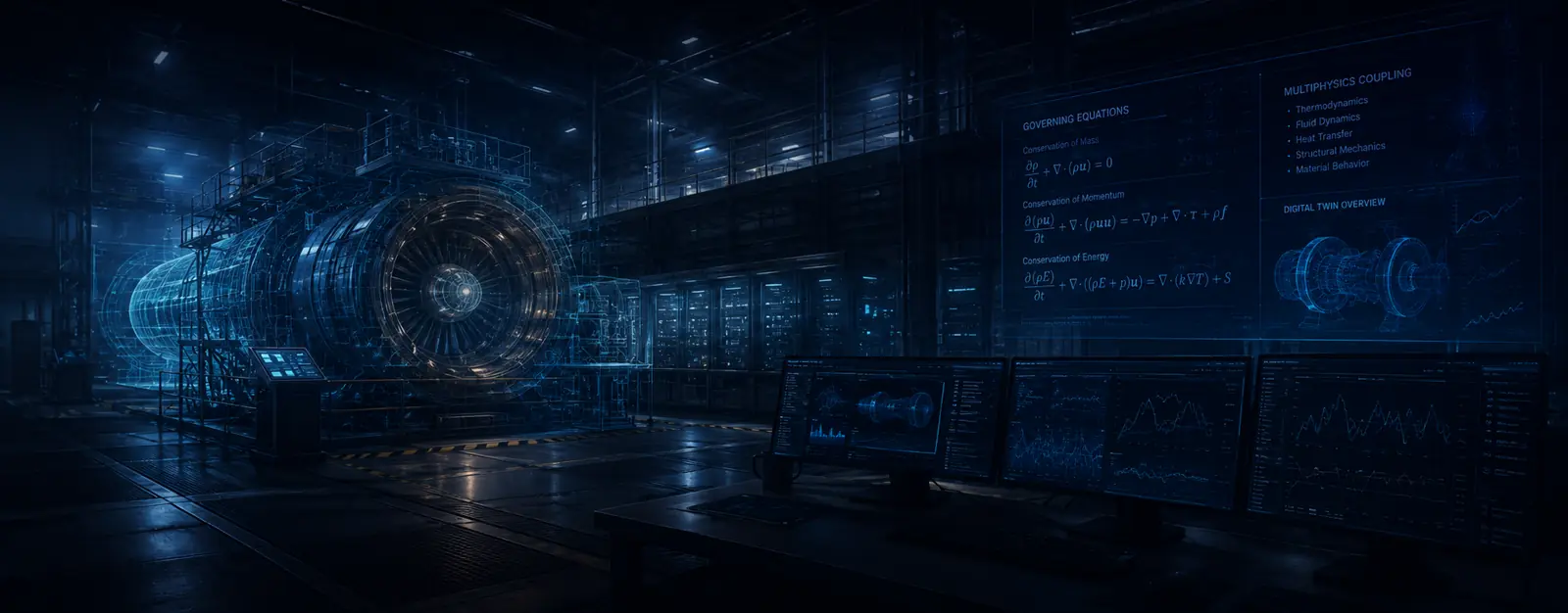
Industrial equipment with physics overlays
06 · grounded

Checked against physics and standards — not just history

Every recommendation is anchored in operating procedures, regulatory frameworks and published technical literature for your industry, and checked against the physical limits of the equipment.

For example: a proposed setpoint outside SOP bounds is refused by the physics check before it reaches a person.

07 · the capability board

Measured, not described

What the platform can prove about itself today — every figure carries its status and its source; nothing here is a roadmap item.

84+ verified checks
capability checks, 27 behavioural
attested as of Aug 2026
21+ signed reports
signed benchmark reports
signed · re-runnable as of Aug 2026
0 third‑party models
models from outside the stack
attested
119+ public datasets
permissively‑licensed, licence‑gated
attested as of Aug 2026
8 reasoning types
ways it reasons
attested
sub‑10 ms
on‑prem serving, signed
signed · re-runnable
35+ tools
tools Ryekronix plans across
attested as of Aug 2026
6 checks
checks before any action
attested
6 specialists
specialists per experiment
attested
100% on‑premises
on your hardware
attested
08 · the pipeline

From licensed public data to a signed improvement on your hardware

Six stages, two lanes, one flywheel: licence‑checked public data, shared learning, your tasks, quality gates, a signed improvement on your site — and your confirmed labels feeding the next one.

RYEDORE · IMPROVES THE SHARED MODELYOUR SITE · YOUR HARDWARELicensed datapublic · licence‑checkedShared learningone model, all sectorsYour taskslife · anomaly · forecastQuality gatesnever worse, signedSigned updatedelivered, not pushedYour site< 10 ms · your labelsconfirmed failure labels → next retrain (the flywheel)It proposes its own improvementsevery proposal goes through the same gateshumans approve what ships; nothing worse than today’s model ever doesmeasured end to end · signed reports · an audit you can re‑run
From licensed public data to a signed improvement on your hardware — and back again through your labels. Every arrow is a measured step.

swipe → to see the whole diagram

09 · one model, many sites

Learned on licensed public data. Tuned on yours. Improvements travel one way.

Ryedore improves one shared cross‑industry model and gates every version. The copy on your hardware learns from your labels. Improvements arrive signed; your data never leaves.

Your site · A refinerytheir hardware · their labels · nothing leavesYour site · A minetheir hardware · their labels · nothing leavesYour site · A hospitaltheir hardware · their labels · nothing leavesYour site · Your planttheir hardware · their labels · nothing leavesRYEDOREthe shared modellearned across industriespublic, licence‑checked data onlynever‑degrade gateevery version checked · signedsigned, gated improvements — they travel one wayno customer data leaves a site — everdashed return = roadmap only: privacy‑preserving learning, never raw data — see Security
Improvements for everyone; every customer’s data stays home.

swipe → to see the whole diagram

10 · in one picture

Four layers, on your hardware — and no third‑party model anywhere

0 third‑party models
models from outside the stack
attested
84+ verified checks
capability checks in the ledger, 27 behavioural
attested as of Aug 2026
01
Data

SCADA, historians, PLC/DCS, MES/CMMS, ERP — what you already collect.

02
Intelligence

Perceive, remember, reason, act — with physics and standards checks.

03
Action

Predictions with confidence, root‑cause chains, recommendations.

04
Enterprise

Dashboards, APIs, audit trails, compliance reports — on your hardware.

Ryekronix — acts, human‑gated

Its six‑check safety gate and the R‑201 agent run are on its own page.

Meet Ryekronix →
Specialists Lab — experiments, read‑only

The baseline‑vs‑intervention pipeline and the six roles are on the Lab page.

Meet the Lab →
Runs on your hardware. Certification status stated plainly.

Every framework’s real status — aligned, architecture‑ready, in progress or planned — lives on the certification register.

100% on‑premises
Deployment
attested
Security →
questions engineers ask

Four answers

How does it explain a prediction?
Every prediction carries a reasoning trace: the readings it saw, the rule or pattern it applied, the similar past incidents it recalled, the causal chain, and a confidence — seven steps you can read and question, not a score.
Does retraining make it forget what it learned?
No. Confirmed failures, near‑misses and root causes are kept and weighted by how much they mattered; noise is pruned, lessons are not. Learning arrives through the same promotion gates as any other change.
How do you stop a new model version from being worse?
Every candidate is evaluated on every prediction task against the version currently serving. Worse on any one — blocked and logged. The blocked / admitted log is public on Verify.
Does it need our data in a cloud to learn?
No. The shared model is trained centrally on public, permissively‑licensed data; the copy on your hardware learns from your labels inside your network. Improvements arrive as signed promotions; nothing travels the other way.
where next

Each part has its own page

what the round builds here

Where the machinery goes next

Two programs the round funds, both extending modules that pass behavioural checks today; roadmap until the signed proof point lands. roadmap · not shipped

program 1

Our own industrial multi‑task encoder, at scale

today · measured
An industrial multi‑task encoder of our own — a shared cross‑industry representation — trained on permissively‑licensed public data across the industry knowledge bases; zero third‑party models anywhere in the stack.
next
A multi‑modal model (time series + maintenance text + equipment graphs) with physics‑informed and asset‑invariant objectives and a mixture of experts per physics regime, trained on the dedicated research fleet the round funds.
proof point
Close the zero‑shot forecasting gap to general foundation models on the signed public benchmarks; match or beat the frontier variable‑condition remaining‑life results — signed.
program 9

Self‑improvement as a research engine

today · measured
The platform proposes its own improvements — and every proposal must pass the same promotion gates as any other change before it can ship.
next
Systematic architecture search and automated experiment campaigns — the platform proposes, runs and gates its own research; humans approve promotions.
proof point
Research efficiency reported quarterly against the signed baselines.

Funded by the growth round — what the round builds, all ten programs →

Watch the machinery run on your machine.

Bring one machine and one question — and watch the gate log fill in beside the answers.